
Wife Wednesday Episode 6
What a Week (in the BEST Way)
She had a good week. For her. The needle running the other way — real lift, real cost, and a system that finally planned ahead. Hope, hedged.

http://paulspringfield.com/wp-content/uploads/2026/07/wifewednesday1jul.mp4
It’s Sunday night. I’m up, doing the thing I do — turning over the week behind us and the week ahead. For an Autistic person (and anyone on the spectrum), they call this rumination. A word, in context, that’s exactly right! Sadly, we tend to neither know nor properly use the big words — us AuDHD folks get distracted. Okay. Back on track.
The rumination tonight, though, isn’t sitting as heavy as usual. I know what’s coming, on paper, and if last week is anything to go by, it’ll actually be what we planned. Control back over our lives. Over our calendar. After the last couple of years, that is not a small thing.
What’s got me puzzled — in the best possible way — is Melody. She had (and I’m afraid to say it out loud, partly because you might have a heart attack hearing it from my mouth, and partly so I don’t jinx it) a good week. Well — in context, anyway.
I need you to understand what “good” means here, because it does not mean what it means for you and me. If you’ve followed along, you know the pattern: after a transfusion she’d usually get a boost. Sometimes the same day, more often the next morning. Lately, though, that boost had mostly gone missing — maybe a day of it, maybe nothing at all. Ever had the flu? That’s her, most of the time. So when I talk about a good stretch, I’m not talking about “well.” I’m talking about trading a high fever for a low one. A bad cold instead of the full flu. That’s the baseline we measure against.
But this week? My goodness. She had — and I’m actually going to say it — she had a GOOD WEEK!
I knew it before any lab told me. She started the dishes. The next day she did it again.
The hidden work nobody thinks about: I generally handle the cooking, the cleaning, all of it — plus keeping the business afloat, caring for four acres, rehabbing the house, and of course tending my hundreds of thousands of girls out back making money — I mean honey. She does what she can — but for the last several months, “what she can” has mostly been staying awake.
There was laundry. And her voice — this is the one that got me — her voice was stronger. Like, on Sunday they could hear her on Zoom. Those are the tells I watch for, the small domestic ones nobody else would think to clock, and last week they were all lit up.
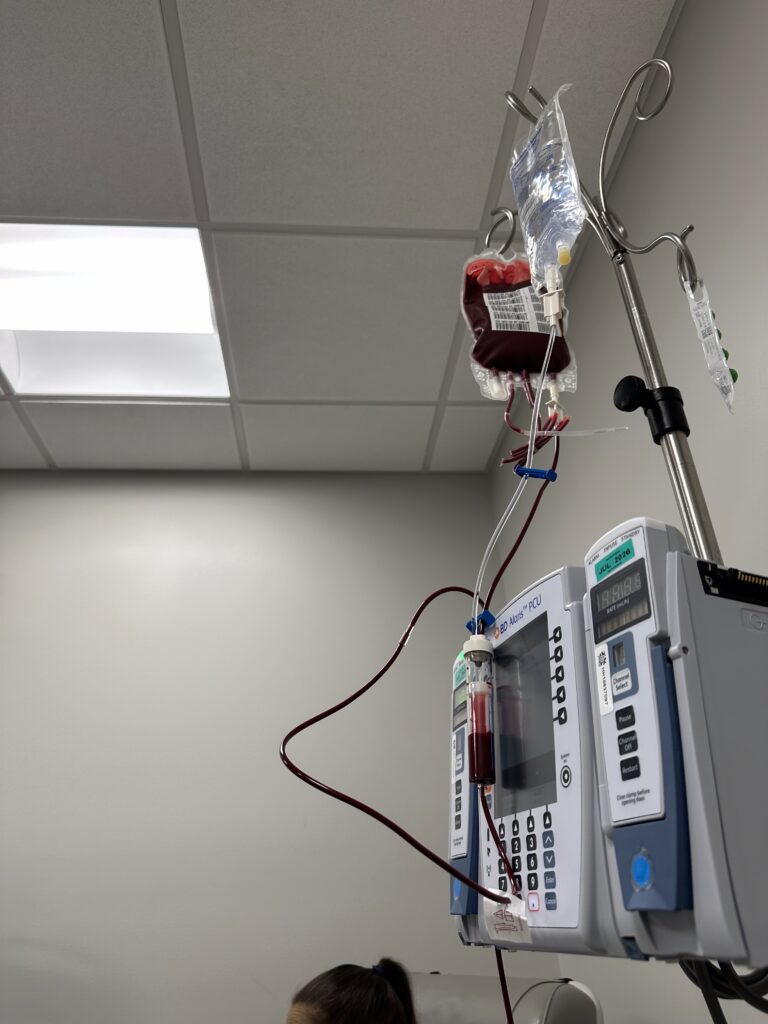
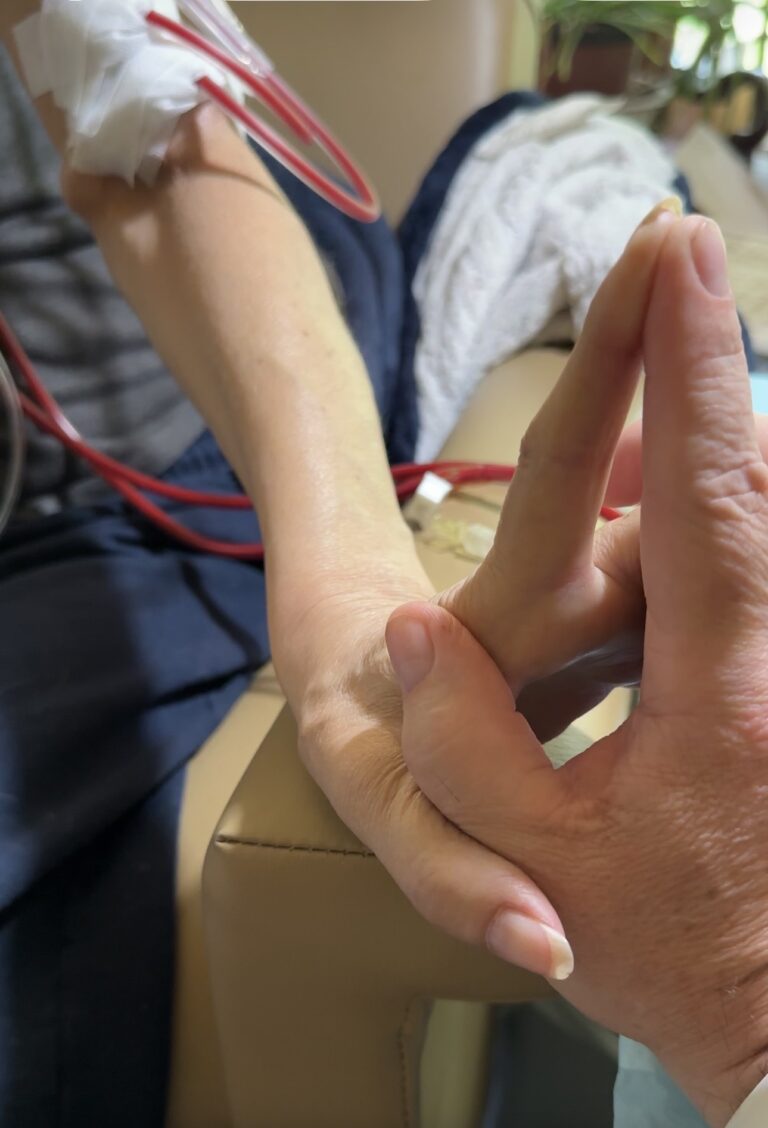
Monday was treatment day. The transfusion we knew was coming. What she didn’t quite brace for was the rest of it — two different medications, more sticks than she bargained for, all in one sitting. And we both badly underestimated how much recovery the stimulation would take out of her — and, honestly, out of me. Monday night brought one brief nosebleed. By the standards of where we’ve been, that was the whole bill for the day. Did I mention it was one appointment, scheduled weeks ago, to handle all of it? Sounds like common sense. So — maybe go read a few of the previous blogs.
Since fellow Autistics will already be nodding: when I say an appointment wipes us out, I don’t just mean Melody’s body. I mean the tax — the part nobody bills you for but you pay anyway. And since I have to explain this one constantly: sensory stimulation means everything coming in — sights, sounds, touch, smells, the lot. Autistic brains can take in something like 40% more of that input than non-autistic brains. Mine’s probably not running at the high end, but still — a new building, new faces, new chairs, new sounds, a whole day of being “on” draws down a battery that’s already low, and it takes days to recharge.
For her, it’s the anxiety and the OCD finding all that unfamiliarity to chew on. Same day, two different nervous systems, both handed a bill on top of the medicine. So “recovering from Monday” isn’t dramatics. It’s the toll the appointment quietly adds.
Tuesday was for recovering from Monday. And then, other than that one rough day and the nosebleed, she felt pretty good. Let me be careful — not well by any standard you’d actually recognize. But relative to her, relative to where she’s been living, it was a complete 180 from her baseline. Is this the new baseline?
I won’t pretend the whole week was a glow, though. The back half handed us the invoice. A couple of days of nausea, the kind that comes off both injections. Twitchy, broken sleep — waking over and over. Weak and worn down from the low hemoglobin. The smell of a meal cooking being enough to turn her stomach the wrong way — a “feature” of the cancer medication. That’s the part the highlight reel leaves out: the good days and the cost of the treatment buying those good days, sitting right next to each other. That’s not a contradiction. That’s just what this is.
0http://paulspringfield.com/wp-content/uploads/2026/07/IMG_3906-scaled.jpeg
And then she slept. A full night. Woke up feeling, by her own measure, better. And here’s the quiet headline I keep coming back to — not a single dialysis treatment had to move. Two weeks running now, dialysis as planned. Adjusted when it needed adjusting, but planned, not scrambled. Organized. Amazing, organized providers, actually sensitive to the other modalities, the comorbidities, the treatment plan as a whole.
Now, I know better than to call one good stretch a trend. Could be a honeymoon phase. Could be the novelty of a system that actually works — or just one that’s different. Could be a good week that was coming anyway. Who knows. It’s an observation, not a victory lap — my theory, and I’ll keep logging it either way.
The week brought something else, too. Emory’s slogan — and I am not making this up, it’s right there on their elevator door (and yes, you’ll catch it in this week’s reel) — is Where Science Meets Hope. And it’s working. She’s been hopeful. And you might be more surprised than I am to hear it: she is back in the fight. That spirit of hers, the one you know and admire — she’s fighting for the future again.

https://paulspringfield.com/wp-content/uploads/2026/07/IMG_0054.mov
Her next milestone is her 50th birthday party. I’ve already had mine — and like my 40th, nobody much noted it was a milestone. But for her, this time, they’ll all be there. Even the family that doesn’t follow either of us, never likes a post, never shares one — not even the ones about her, the ones that might actually get her better care. But hey — that’s okay. Their hearts, I’m told, are just broken over all this. Funny how that works. Anyway — they’ll come, and it’ll be quite a celebration. Which lands differently when you remember that just a few months ago, we were the ones looking into hospice.
Now — I know Emory is not a magical place. Their blood bank isn’t stocked with some ancient, organic, untouched-source blood, or whatever plays well as viral content these days. There’s no secret sauce. But there is a difference, and it’s worth naming, because it’s the whole point.
Here’s what last week actually looked like. She knew before Monday she’d have labs. We expected she’d need a transfusion. She got the labs, got the transfusion, got the medications — all of it, in the first week. Scheduled in advance, based on the data we actually had. That meant no separate trip just for labs the following Monday morning. No second trip back for the blood. No string of calls to my dear, sweet Anjali — the nurse who somehow kept a little hope alive for the rest of us — to chase down whatever went sideways. No calls to shuffle her other appointments to make it all fit. And not one dialysis treatment had to move. All of it planned, because it’s a no-brainer — the pattern is clear: every week. I think that’s what “transfusion dependent” means?
This wasn’t the best week on every front. The valleys were still there; you just read about them — and others, on the business and home fronts, you didn’t. But set against how Melody has actually felt, even the valleys haven’t been as dark.