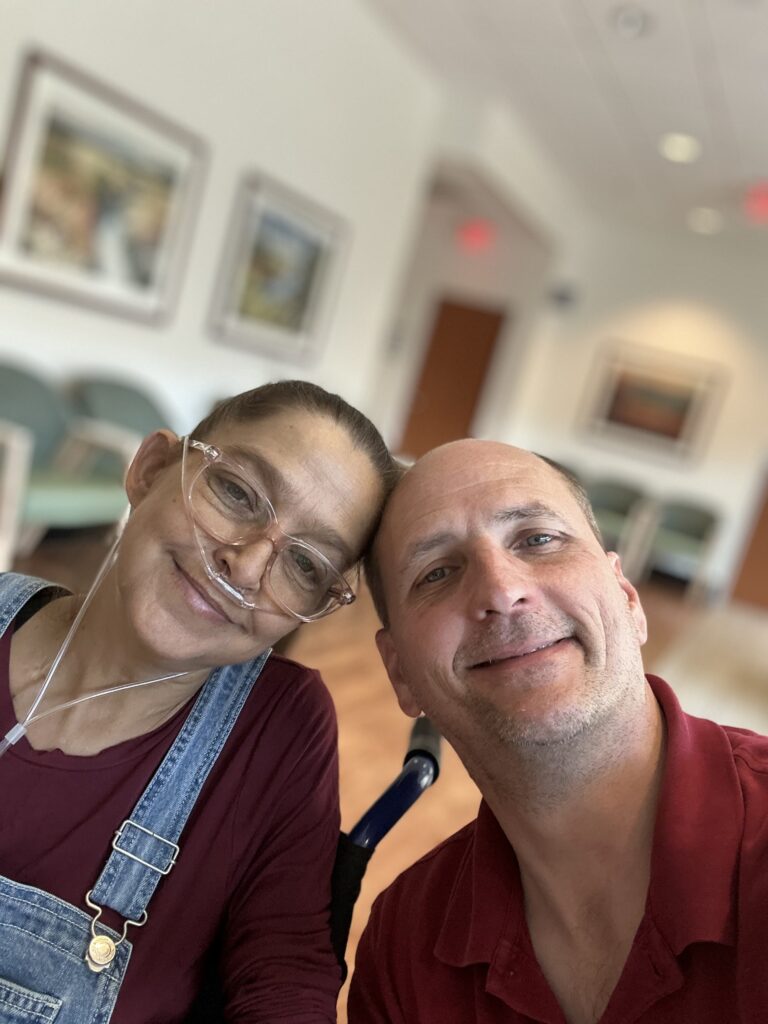
Melody’s care closes one chapter and opens a better one. The people were never the problem — the system is. And that fight isn’t over.
Wednesday, June 24, 2026 · Paul Springfield
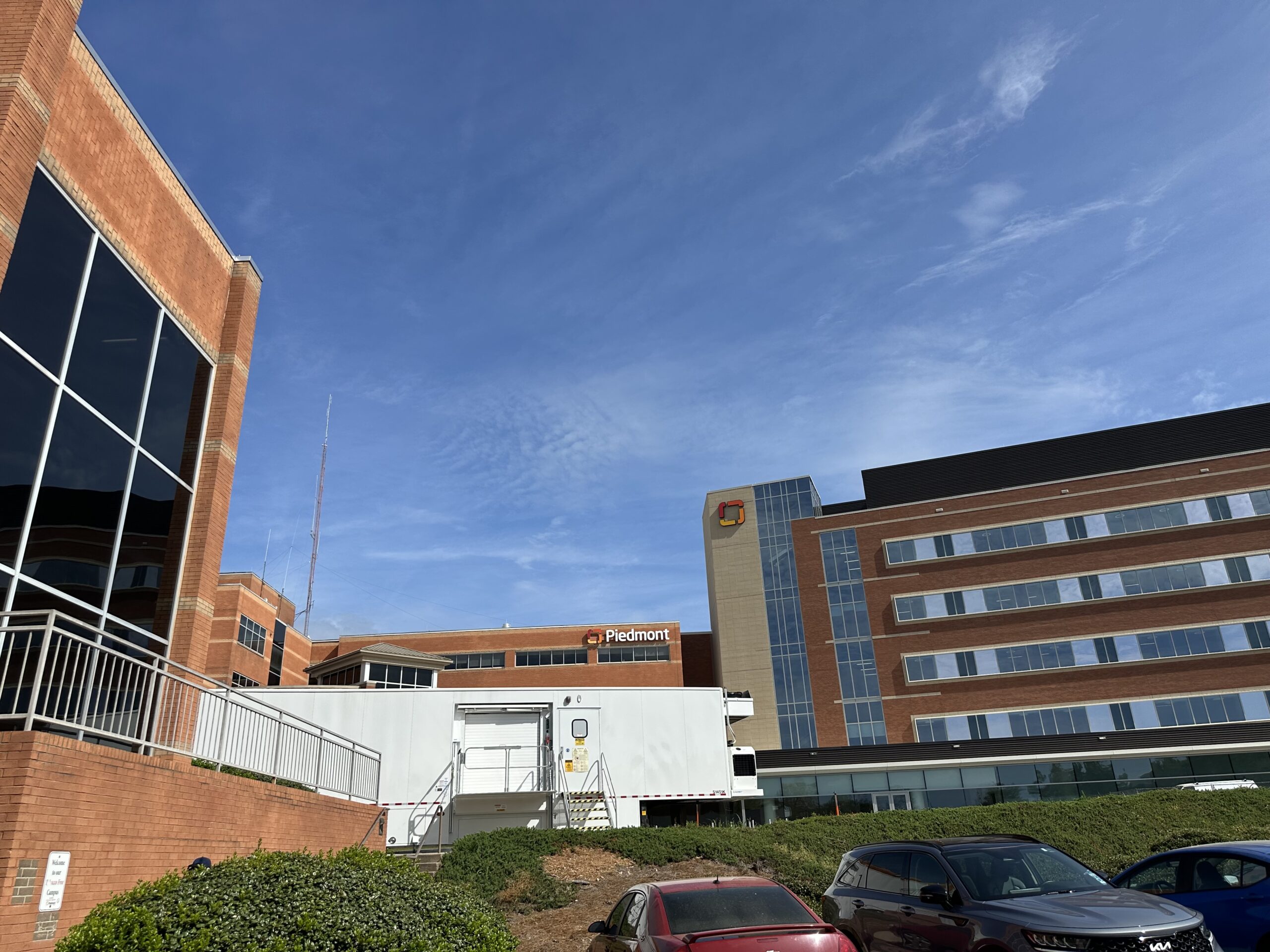
Visual 01 · HeroMuted · transition
Establishing shot to set the Sunday-night tone: the road at dawn, the car loaded for the hospital run, or a hospital exterior in flat morning light. Quiet, documentary, weary. — drop /http://paulspringfield.com/wp-content/uploads/2026/06/IMG_9674.mov/code>
Here we are again. Sunday night. I know what the week holds, on paper. I also plan for the unplanned — the chaos, the problems that don't have to be problems but somehow always are.
This is a milestone week in Melody's journey. We close one chapter and open another. There are still hard conversations to be had, but for once there's a little hope — an end in sight that doesn't just mean the end of a bad day.
And it's a big week.
Oncology kicks it off — doctor and a chemo infusion, both. Labs, then another doctor Tuesday. Besides dialysis, that's it for labs.
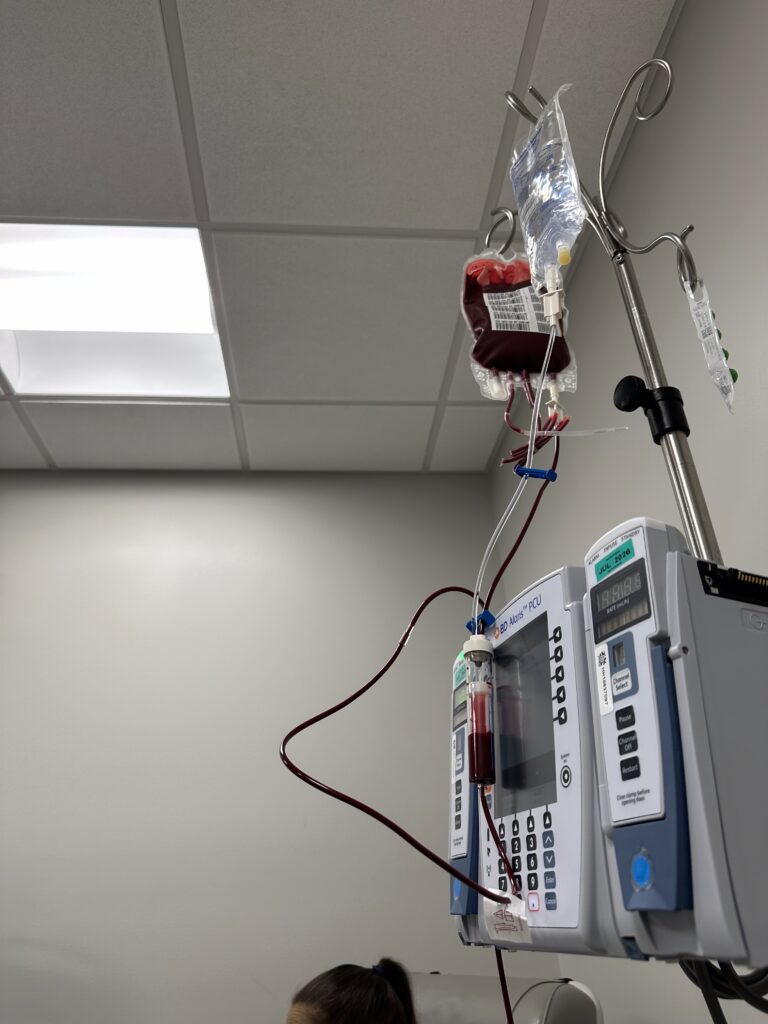
What a hilarious joke, those weekly labs. Every week. Same purpose every time — blood counts, checking whether a transfusion's needed. Here's something you only learn by living it: if you need a transfusion, it has to have a type and screen first. And Piedmont never met a type and screen it didn't want to run twice. Same patient. Same day. Same single unit of blood.
So we arrived hoping — thinking, even — that we'd wrap up the Piedmont bits that day. Funny joke. No type and screen was ordered for the labs, which meant a phone call and a second trip the next day.
Here's the part nobody sees. A seriously ill person doesn't just go to appointments. She fields the calls. All of them. The scheduler, the doctor's office, the pharmacy, the refill loop that bounces between the pharmacy and the system and back. The lab calling about the type and screen nobody ordered. And stacked right on top of that: five "we've reviewed your Medicare record" robocalls, the AI scam calls, the wall of general spam. She has to answer every single one — because the one she lets ring is the one that's actually the pharmacy, or the slot, or the window. So she takes the scam, and the scam, and the scam, to catch the one that matters. That's a full-time job bolted onto being sick. On top of the riding and the sitting and the waiting that apparently doesn't count as tiring.
5
"We've reviewed your Medicare record" calls in a day — answered, because the next one might be the pharmacy.
Visual 02 · The callsMuted · Piedmont
Melody's phone mid-call, or a screen stacked with unknown / spam numbers. The siege. Candid, not staged — a still or short loop from the b-roll. — drop http://paulspringfield.com/wp-content/uploads/2026/06/calls.mov
Saying goodbye is the hard part
The frustration isn't as high this week, though. Our big issue this time isn't the system. It's saying goodbye — to the providers and staff we actually trust, the ones we've built relationships with.
That last part is the key. Letting go of people you trust is hard under the best of conditions, let alone these.
For two neurodivergent people, familiarity and routine aren't a luxury. They're load-bearing.
The oncologist saw the look. She's seen it a few times now — that awkward "we like you, we trust you, and we can't be seen by you anymore." Maybe I'm being a little dramatic. But the essence of it is real.
And then there was my birthday
So — goody. It was my birthday. Melody had exactly one light appointment: no oxygen tanks, no doctors to call, nothing else, and in the morning. So it was going to be great. Get it done, then maybe relax. Maybe enjoy something for a few minutes. On my birthday.
I've reached the point in life where birthdays are important to everyone except me. Every year I quietly check to see if anyone remembers. Some people should. Others probably should. And every year, unless I broadcast it across socials and collect a pile of empty, app-promoted clicks, it turns out no one really knows or cares one way or the other.
To round it out, I did a reel. I didn't ask for anything for myself — just a donation of your choice to the causes that matter to me, or something small for Melody: a coffee, parking, the late-night meal after a transfusion that ran long. It got the fewest views of anything I've ever posted. Message received.
I just don't know why… the older I get, the less social I want to be. It's a confusing world, full of contradictions and mixed messages — celebrate me, donate to this, click here, and also, no one's really listening. Anyway. As Tuesday made perfectly clear: I am not the subject here.
But that was okay, because I had a new challenge waiting. Remember that type and screen? Right. We had to get it done ASAP to have any real chance of not waiting five days for a transfusion. So: drive down to Fayetteville, over to Stockbridge, then back home. On my birthday.
I'm told sick people going to doctors are just babies. There's no way they could possibly be tired and worn out from… riding and sitting all day. Never mind that "just sitting" is hours of fluorescent waiting rooms, needle sticks, being moved building to building, and answering that phone the whole time. But sure. Babies.
They "worked her in." We pushed for earlier than the Friday they wanted, and stressed that sooner was better. Only two days this time. Weird.
The last visit
The infusion center, bless their hearts, seemed genuinely surprised this was our last visit. Sit with that for a second. A critically ill patient — transfusion-dependent, there week after week — is walking out the door for good, and the surprise was real. That surprise is the diagnosis: a system so wrapped up in its own ecosystem, its own dashboards and protocols and standing orders, that it never once clocked one of its most vulnerable patients heading for the exit. And that is exactly the kind of thing that quietly erodes Melody's quality of life and her health.
The Piedmont Promise™
Their own branding promises to care for every patient by listening and genuinely hearing — treating you the way they'd want to be treated, alleviating fear and not just pain.
And yet they were surprised we were leaving. Turns out the Promise doesn't cover noticing when someone walks out.
We came anyway, with doughnuts for the staff — a real goodbye, not a sour one. So long, and thanks for the fish.
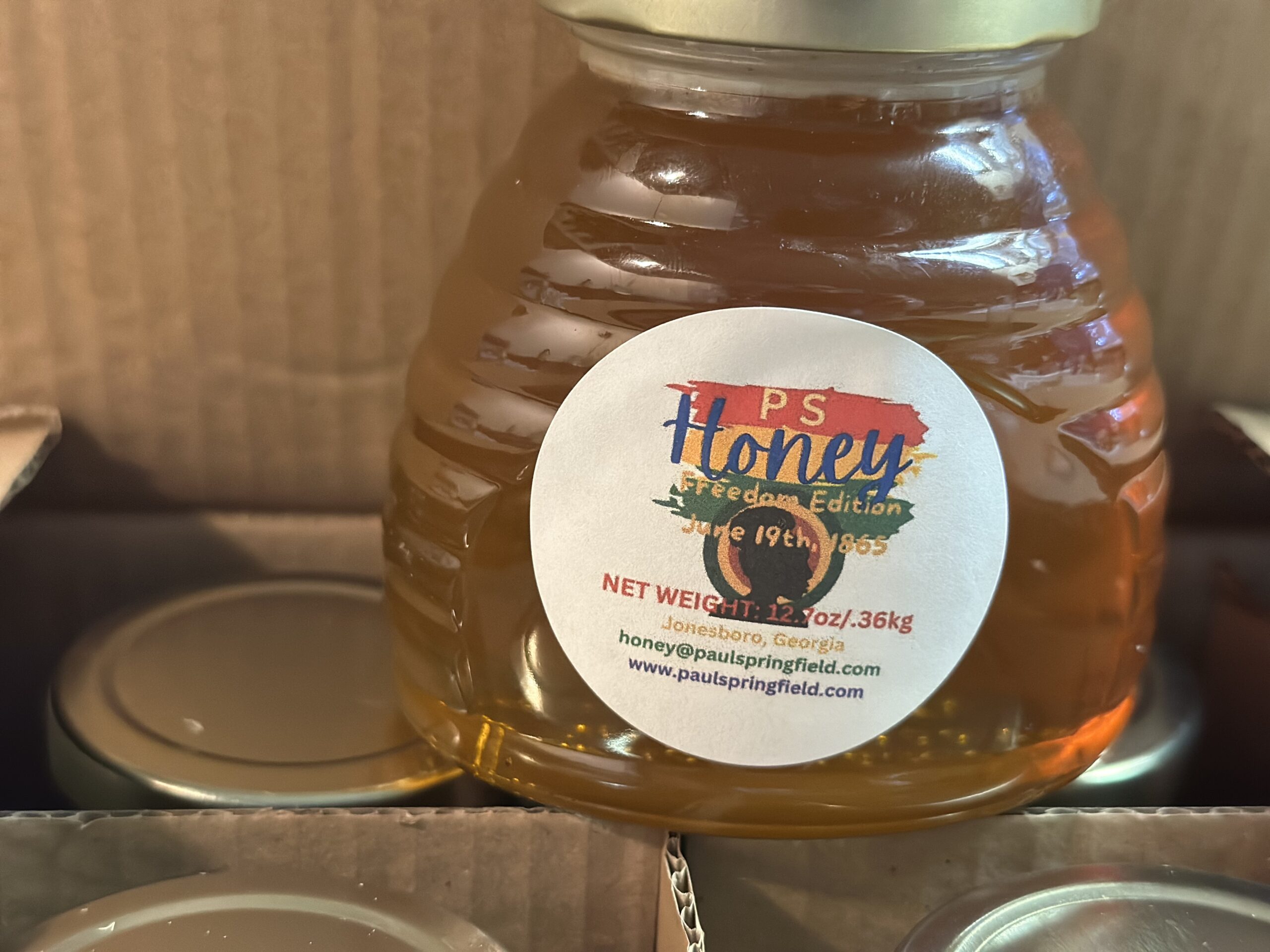
I'd also brought mushroom coffee and honey, specifically for Emma. But Emma wasn't there anymore. And Emma mattered. She was the only one who ever questioned the volumes. After months of blown vein after blown vein — month after month, nobody upstream stopping to think maybe we can do better — she was the one who finally got a port procedure set up. She advocated inside the system, hard, and for all the work everyone there genuinely puts in, she somehow ran circles around the whole machine. Living proof it doesn't have to grind you down… which is, I can only assume, exactly why she's gone. So her gift got folded into the general goodbye, handed to the same staff already holding doughnuts. The one person I came to thank had already been shown the door.
It might have been more surprising if we hadn't already been through all of this, and if it weren't our last week anyway. The clinic manager was the one most caught off guard — she seemed to think she'd be our savior, ready to "talk about good dates" for a standing transfusion. A little late, Piedmont. Six months of patience with someone in critical health is more than generous.
Visual 03 · The last visitMuted · Piedmont
The goodbye gifts — doughnut box, honey jars, mushroom coffee on the infusion-center counter — or the infusion bay itself. The closing image of the dark act. — drop http://paulspringfield.com/wp-content/uploads/2026/05/IMG_2576-scaled.jpeg
⬡ ⬢ ⬡
Where we're going
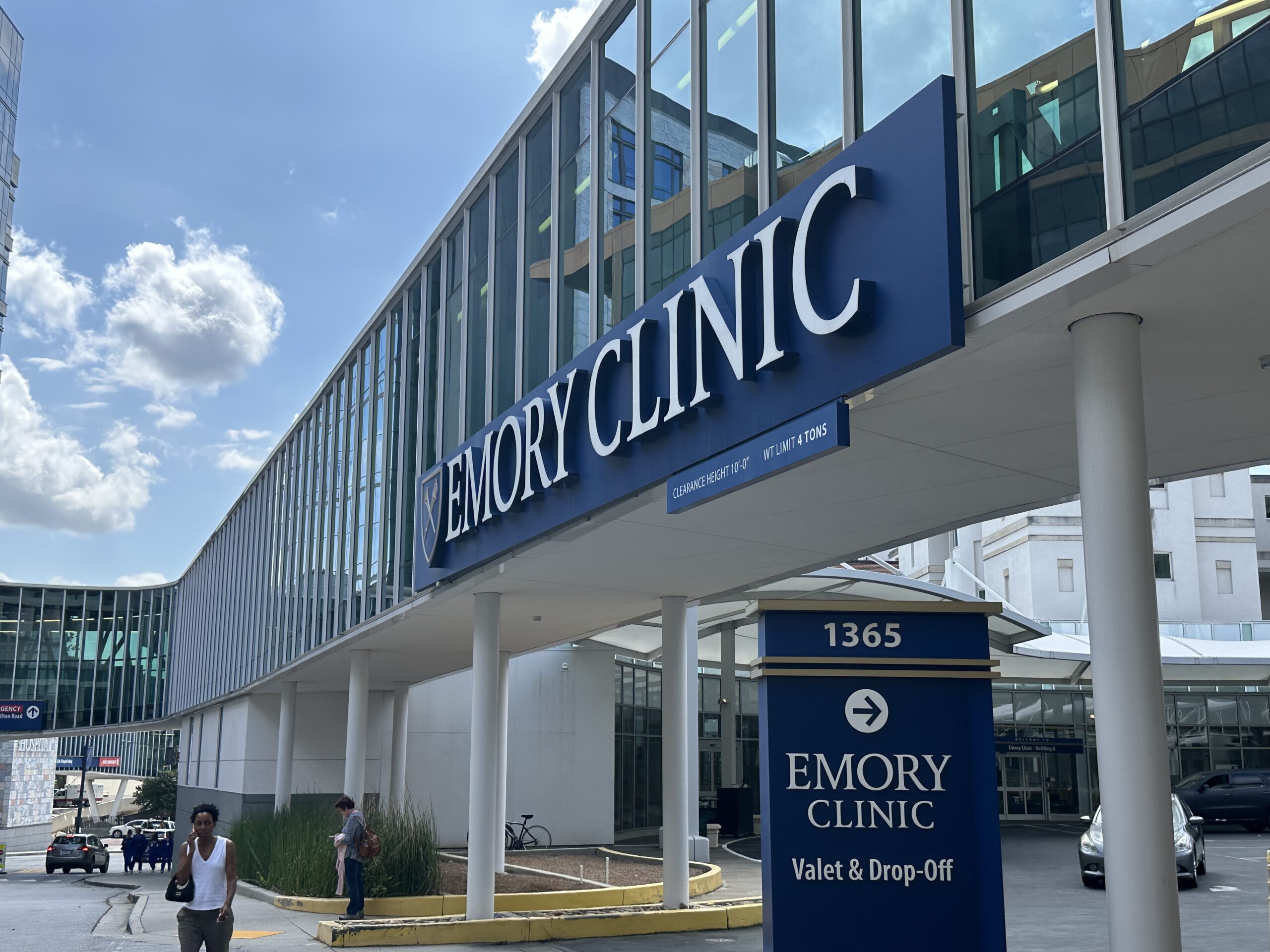
I keep saying "last week." Remember the last blog, and what we did that Friday? We went to Emory's Winship Cancer Institute.
Visual 04 · Arriving at EmoryVibrant · Emory
Winship Cancer Institute signage or exterior in vibrant daylight. This is THE turn — the first breath of the bright act. Match the reel's happy-music drop here. — drop http://paulspringfield.com/wp-content/uploads/2026/06/IMG_0220-scaled.jpeg/code>
We weren't just impressed. We were shocked. We still are. We walked out with a transfusion, labs, injections, and two new courses of treatment — after a two-hour consult. That's what it looks like when you're in adult healthcare.
The process was smooth. The infrastructure works. It's a professional medical environment. We had labs drawn and results back within fifteen minutes — fast, and accurate. (There's a whole story in that word, accurate. That's next week.)
Visual 05 · A system that worksVibrant · Emory
The Emory environment that works: a clean consult room, the lab, the chair, results up on a screen fast. Warm, professional, hopeful — the visual opposite of the Piedmont footage. — drop https://paulspringfield.com/wp-content/uploads/2026/06/IMG_0057.mov
The doctor had a real conversation with us. And he'd already read the chart. Her chart isn't like yours or mine — it's enormous. Six months of her records can hold what yours or mine might accumulate in a decade. Notes, details, history, and especially labs. He'd read back through her history into the 2010s. Most of that history has been at Emory anyway, so it felt like coming home.
So not only was the visit brilliant on its own — we left with a treatment change and an addition. Her Piedmont oncologist had wanted to make that same change months ago. It just… never happened. Funny how a system that actually works makes the "impossible" possible inside two hours.
And here's the thing I keep coming back to. For the first time in longer than I can remember, we have a schedule. Treatment started this week and it's booked through July. Not "we'll work you in." Not "call back tomorrow." Not a five-day wait for blood. A plan. That's the end in sight I mentioned on Sunday night — and it turns out it was real.
The people were never the problem
Let me be clear about who I'm fighting, because the first shot's already been fired and I'm not finished. My problem was never the providers. It was the system around them. The oncologist left us a handoff note you could teach a class from — every hemoglobin value, every dose, every detail, laid out so the next team couldn't possibly drop the ball. That's not a system doing its job. That's a person doing the system's job for it, on her way out the door.
Visual 06 · The note (optional)Neutral
The oncologist's handoff note — redact all PHI — showing the sheer density of detail that proves the providers were never the problem. Or the honey jars for the nurse-customer. Skip if nothing usable. — drop /wp-content/uploads/2026/06/handoff-note.jpg
And the PA? She's friends with our new doctor at Emory. I only found that out by accident. I'd stopped by to drop off honey for one of the nurses — a customer of mine — and ran into the PA, who lit up and started telling me what she'd been doing. Turns out she'd spent days quietly working her own contacts, coordinating with her friend to smooth our handoff to Emory. Nobody asked her to. That was my last real engagement at that office: a good professional going out of her way, on her own time, to make the machine work in spite of itself.
And here's where it gets interesting. The opening salvo went to the infusion center — but infusion rolls up under the hospital, and the hospital is the bigger, uglier fight still ahead. Right on cue, the universe handed me a gift. There's a man who's a patient in the same system we are — oncology and infusion, same building, same chairs, same drip. He noticed me filming at the oncology office and got very interested. Asked their nurse about it. Wanted to know the whole situation. Now, who takes that kind of personal interest in someone documenting Piedmont, from inside a Piedmont infusion chair? Not the Mayo Clinic. Not a lawyer. It's the COO of Piedmont. Later, during one of Melody's transfusions, that same nurse came by and handed me his personal cell number. So no — the Piedmont chapter isn't closed. It's barely started. Following story.
The providers were never the problem. The system was. And now I've got a number to call about it.
Next Week
Emory, up close. Two hours, two new courses of treatment, and a system that actually works. I'll take you inside the Winship consult — what changed, why it matters, and what it taught us about everything we'd been told before. You'll want to be following so you don't miss it.
Wife Wednesday — What a Week (in the BEST Way) Wife Wednesday · Episode 6 What a Week (in the BEST Way) She had a good week. For her. The needle running the other way — real lift, real cost, and a system that finally planned ahead. Hope, hedged. Wednesday, July 1, 2026 · Paul…
Wife Wednesday: The Week That Almost Went as Planned | Paul Springfield Paul Springfield ← Paul Unplugged Series Wife Wednesday · #WifeWednesday Episode 02 Patient Advocacy · Caregiving Paul Springfield · Lovejoy, Georgia · Wednesday The Week That AlmostWent as Planned. Labs Monday. Transfusion Tuesday. Emma. A picnic of opposites. And next week is already…
Problems That
Don’t Have to Be.
34,186 people watched a poorly made video filmed at 4am after an exhausting day, month, and two years. This is the full story — written Wednesday, labs today, rest of the week unknown.
“She started asking ‘how many now?’ — during times she was otherwise exhausted, almost lethargic. That number gave her something to hold onto.”
That moment is why I’m writing this. Not to chase views. Because if 24,000 people are paying attention, I owe it to Melody — and to this community — to use that attention for something real.
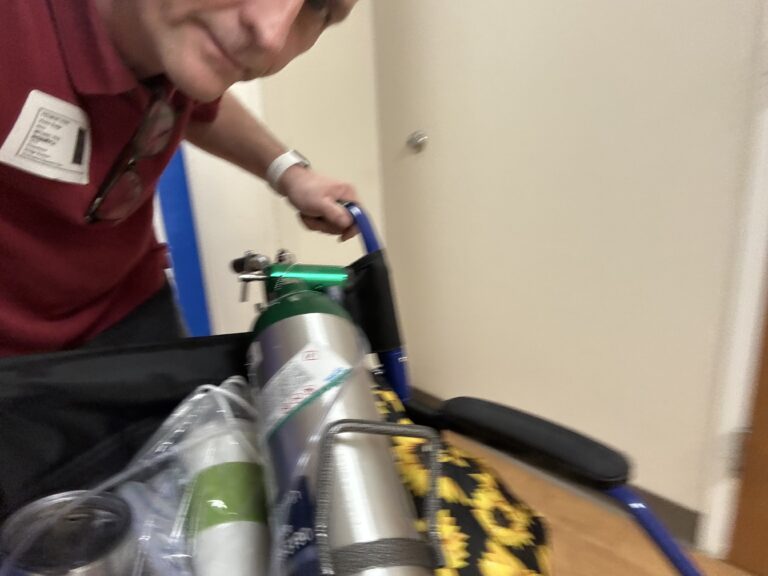
It’s midnight. I’m rolling an oxygen tank on a dolly, balanced on a wheelchair, down a hospital hallway. Third room since 1:00pm. My wife is in the chair. I haven’t slept in 36 hours. I have deliverables due tomorrow that I will miss — one of them for the third time.