Wife Wednesday Episode Lucky 13
Listen to this episode
28 minutes, narrated by Paul (yes, a Top Host finalist). Or scroll and read. Your call.
My neighbor has a log splitter that he lets me borrow. It’s a great loan, given our home is mostly wood-heated, and honestly, it spends more days on my property than his. He brought it over this summer. I had trees to process, and more to fell and process, but the priority was this coming winter’s fuel.
Well, a few weeks ago I finally got the time and the window to split some wood. I split a bunch and thought, alright, behind schedule, but we’re off to a great start!
A few days later, we got some much-needed rain, and another tree fell. Would you believe it missed the splitter by about a foot? It also landed right in the way, so I couldn’t move the splitter to the next section to get it split up.
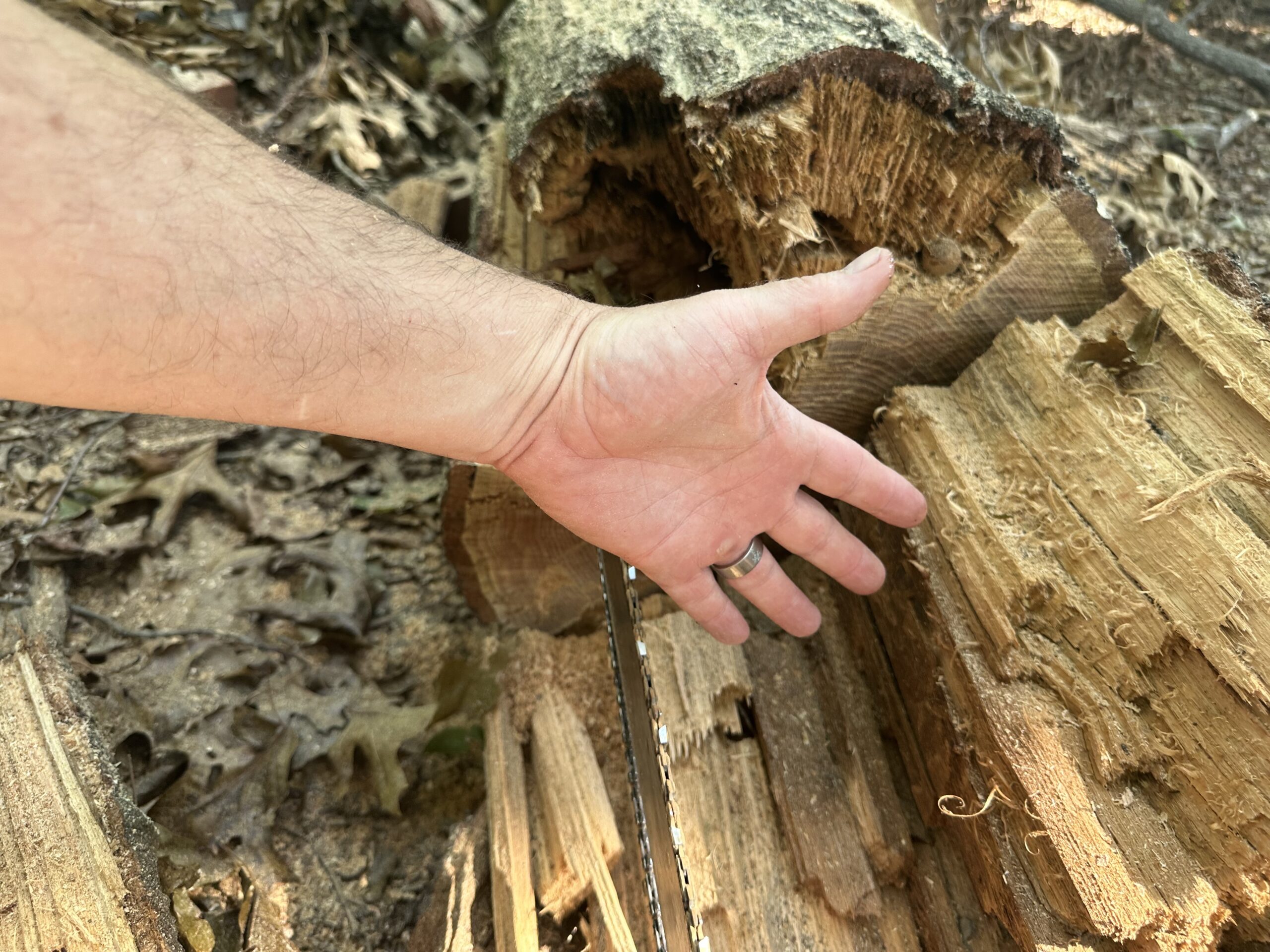
That’s how these last few weeks have been.
⬡ ⬡ ⬡
It’s been a minute
It’s been a minute for Wife Wednesday, and when you read this, you’ll understand why. This past month has been a battle on all sides. To catch you up: Melody was hospitalized for eight or so days with a strange BP issue. And Little Sally left me stranded, and she’s still in the shop.
Part of that delay is a part. The shop looked for two weeks, then called me, so I offered to find it. I’m pretty good at finding things. First, I ordered the wrong one. Second, the other vendor sent the wrong one. Third time, the right one. Each try, wait a week, so that’s three weeks right there. Today I have one harness mailed back, one waiting to be mailed, and one waiting to be installed. Meanwhile, we’ve been without transportation, and we’ve missed out on revenue.
Then my chainsaw decided to be whiny. After a bunch of troubleshooting, I finally accepted it needed an oil pump. I bought one, and it arrived a week late. It still didn’t work. So I bought another, and when I pulled the first new one back out, I saw why: the gears were smoothed right off. The new part was defective. Wait again. And the chainsaw chains? You know it. Three tries to ship me the right ones.
When you don’t have transportation, you rely on help to get places, and online ordering and delivery become gold. Except when it takes three tries to get it right. After sending the second set of chains back, my neighbor was generous enough to loan me his car, and I was so happy to go to Crane Hardware. It’s locally owned and operated, open since 1972. I do work there part-time, though these days most of my parts are taken up caring for Melody. I still handle their socials and PR.
Business is slow, so this is my plug for shopping local. I picked up a chain and got most of that tree cut up the same day. Yes, THAT tree, the one that missed the splitter. If I hadn’t known what I needed, they’d have looked it up and gotten me the right thing. If I’d bought the wrong size, I could’ve walked it back in. Three weeks of shipping roulette, versus one afternoon.
Oh, and FedEx hit our gate. The new gate is now installed, but that’s a whole other thing.
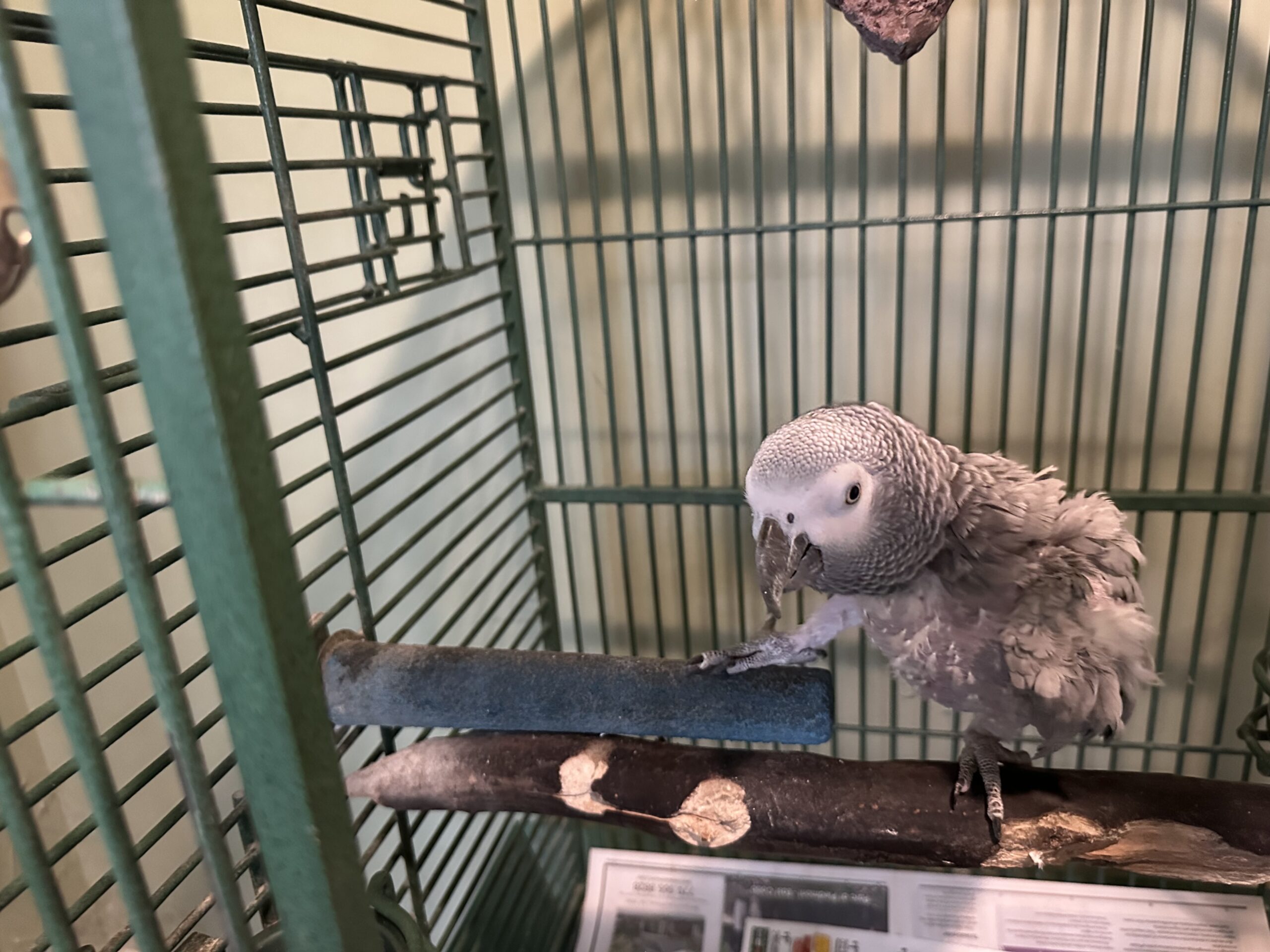
Mackie, our African grey, is high energy, and we leave her door open during the day. She has started taking the baseboards off. Last week she went to Charlie’s cage again. Got in again. And didn’t stop there. She was attacking him and plucking his feathers, and she would NOT listen or let me get her. It was an event. Peace has been restored.
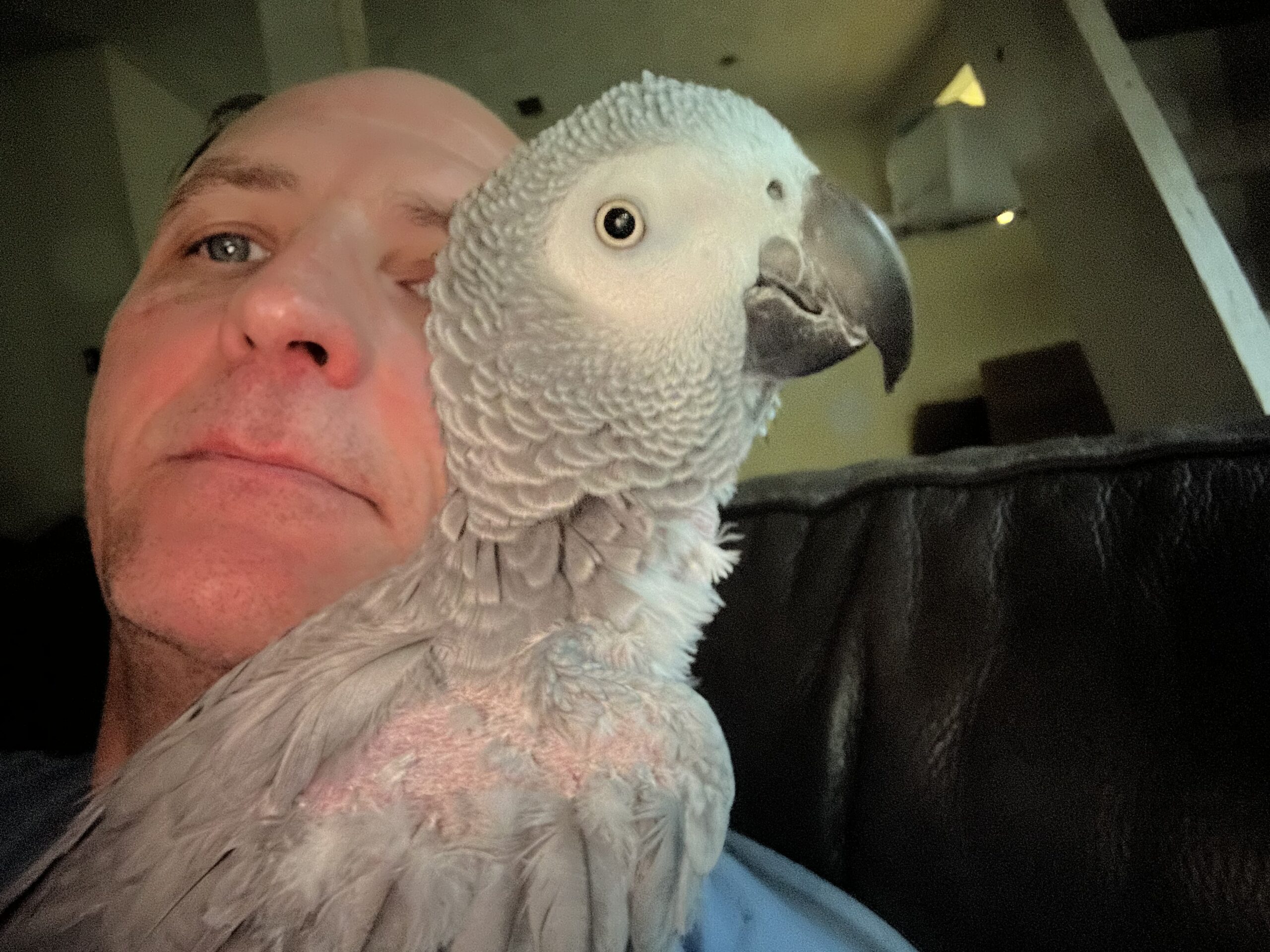
My best analogy for this month: I now understand the hamster on the wheel. It spins, and spins, and spins… and you look up, and it’s almost Christmas.
⬡ ⬡ ⬡
The good news (yes, there is some)
Overall, Melody has been in decent shape, health-wise. Living with a terminal disease, with a limit that’s coming sooner than you think, has been a roller coaster. For about a year, she needed at least one transfusion every week. Every. Week. But I’m happy to report, and what a praise to God:
Much of it is the same medicine she got from her previous provider. So what’s different? Two things, we think.
First, she was anemic long before her kidneys failed. Her previous providers could never get that through their heads, but her oncologist gets it. Instead of treating just the MDS, they treat the MDS and the anemia separately.
Second, the system. At Emory, it’s one day: labs, infusion, and a transfusion IF needed. And if it’s needed, they’re already prepared. No type and screen 12 to 72 hours ahead before they’ll even place the order. No walking next door to sign a form for EVERY transfusion. No waiting. If she needs blood, they’re ready. If she doesn’t, they’re ready anyway. They even “stock the popular models” in a cooler. That’s the big deal: their system manages transfusion-dependent patients seamlessly.
With her previous provider, it went like this. Go to the hospital and get labs, which takes about an hour start to finish. Wait for the infusion center to call, which they often didn’t. Call your favorite nurse at the oncologist and start the negotiations. Often the “only” slot was three or four days out, and when hemoglobin is in the 6s, goodness, she is MISERABLE. Several calls, sometimes ending in the infusion center, sometimes in the ED. Now it’s one scheduled appointment, instead of two appointments and a pile of phone calls.
Lovejoy, Ga. — Local caregiver, pastor, beekeeper, and voice actor Paul Springfield has been named a finalist in Top Host, a national search for the next podcast host. The winner receives $25,000, a six-episode podcast produced by iHeart, and a seat On Air with Ryan Seacrest. As of press time he sits 5th in a group of 77, and has held 1st.
Sources close to the candidate report he has “spent years talking to people who weren’t listening” and would like to try people who are.
Voting is free, once every 24 hours. The first cut is October 15. Vote, then send it to one person: tophost.org/2026/paul-springfield
The candidate asks that if you find someone more worthy of your sacred vote, you vote for them. He means it.
⬡ ⬡ ⬡
“Wait, she was hospitalized?”
“We didn’t know!” (Maybe keep in touch? Follow the socials?) Yes. Eight days, nine days, who knows the days.
It started the week before. At her Wednesday dialysis, her BP dropped to 70-something. The next session, Friday, it dropped to 80-something, nearly a 60-point drop from where she started, which was her usual baseline. Her BP has always been a “challenge,” though lately it’s been better managed, including the white coat syndrome she has. Yes, even seasoned veterans get white coat syndrome.
Well… what had happen was…
Her dialysis has been poorly managed by her clinic. I don’t mean the prescription or the frequency. I mean the adjustments, the critical ones that determine how each session runs, and those take months. In this case (my dialysis friends, if you know, you know) it was her dry weight.
Dry weight, in plain English
Dialysis does the kidneys’ job of pulling extra fluid out of the body. “Dry weight” is the target: what you’d weigh with no extra fluid on board. Every session pulls you toward that number. If the number is set too low and doesn’t keep up with your real weight, dialysis keeps pulling fluid you don’t actually have to spare. It’s an estimate, set by people, and it has to be updated by people.
She took a year off from life and lost a bunch of weight. Then she found a new provider, started feeling better, and began putting weight back on. But her dry weight is set by humans who see her less than 10 minutes a month. It’s hard-coded, and if you’re not meeting those parameters, they call and ask why you’re “noncompliant.”
I’m making it sound more hardcore than it is, but it’s pretty close. “Noncompliant” is a real threat and intimidation tactic in dialysis clinics. They seem to care about units rather than patients, and they spend more time on corporate checklists with smiley faces than on listening. You say, “I think I’m still gaining weight,” and they answer, “Your numbers look great, let’s keep it like it is.”
Guess where I’m going?
Once again, it was multifactorial. She was dehydrated, and not in the “just get you a glass of water, girl” sense. (Mackie tells us that all the time, actually.) Dialysis was pulling imaginary weight. She ran so dry that when blood went down to her toes, there wasn’t enough volume to bring it back up to her heart. In the hospital, that showed up as orthostatic blood pressure: a 40- to 60-point drop from sitting to standing.
But they figured it out! They changed her BP meds back to what worked before. Her previous provider’s infusion center had added two: one her cardiologist had banned, and one that’s their “go-to” for high blood pressure. Her BP issues were more anxiety than cardiac, as her baseline at Emory’s infusion center shows. So dialysis was pulling too much, and she was on bad medicine. They added the right one back, added another, and we’re still fine-tuning with the cardiologist. Overall, it’s been fairly stable.
Here’s what nobody tells you: treatment is math and educated guesses.
Dry weight is an estimate, and blood pressure meds get adjusted by trial. It isn’t negligence. It’s just what treatment is, which is why somebody has to be paying attention.
That’s why I serve on The Kidney Project‘s Patient Advisory Council. Patients like Melody are on a treatment that hasn’t really been updated in over 50 years, and we can do better. Dialysis only does a kidney’s job while the machine is running. My kidneys run all the time. Her dialysis machine runs three hours, every other day.
The Kidney Project is close to human trials on something better: less strain on the patient and much smaller equipment. The best part? It’s an artificial kidney. And for others, part of the invention can be used as a new form of dialysis that runs more often.
Can you imagine driving a horse-drawn carriage today? About 50 years ago, my family’s farm still did. Dialysis is still riding around in a horse-drawn carriage.
After all these years, I still don’t fully get the hierarchy. Here’s my working cheat sheet:
- Attending: the doctor in charge. Final say.
- Hospitalist: an attending who only works inside the hospital and runs your stay.
- Fellow: done with residency, now training in a specialty.
- Resident: a doctor in training. The chief resident herds the other residents. An intern is a first-year resident.
- PA / NP: they diagnose, prescribe, and often know your chart best.
- RN (a BSN is the degree), LPN, techs: the people who actually keep you alive between rounds.
Honestly? I know it’s Dr. Smith, the PA, and Paula. Paula is the one you want to know.
Advocacy tip: ask questions, and keep at it. Years ago, persistence (and a broken system) put me on a first-name basis with the person at the very top. I didn’t even know his title. You don’t need to know the org chart. You just need to keep asking until someone who can fix it is listening.
⬡ ⬡ ⬡
Fun fact and pro tip in one: PAY ATTENTION
Seriously. If it’s 18 medications, know what they are and who prescribed them. We trust Emory. As we’ve said, they’re Adult Healthcare, and the results are on full display. But they’re not omnipotent, and MyChart isn’t as foolproof as they tell you.
While she was admitted, medications in two categories were never given. One was respiratory. Other than her daily maintenance med, she’s actually been breathing fairly well: yes, on continuous O2, but no breathing treatments or rescue inhalers since June. The other category I won’t elaborate on, but those medications are not recommended to just stop taking. That’s eight days in the hospital, then another seven days at home of the same thing. We remembered the breathing medication, so she got that one the last few days. The others never crossed my mind. She was feeling so good after the hospital that I took the discharge medication list and set up her meds for the week straight from it. Near the end of the week, it dawned on us: the other category. It may take another two or three weeks, but soon everything should be back in place and settled into its role on Team Body.
Here’s the part that matters. These were medications we’d had to fight Piedmont’s ED and inpatient for EVERY visit, just to make sure she received them. EVERY visit. We have never had to fight Emory for anything. That’s a very clear distinction. Still, somewhere in the transfer of care, they slipped through. This time we all share the responsibility, because neither of us was paying attention when admissions read the list back (and one of us had good reason not to be listening).
So, two lessons.
First: when a provider is bouncing around with the latest thing a pharma rep is peddling, or when a nurse slips in and barely whispers the name of a new medication, ASK. What is it, what does it do, and why am I getting it? You’re not accusing anyone. You’re the patient, they’re the service provider.
You’re the customer, they’re the vendor. Be professional.
Second, and this one I’m still learning: keep track of HISTORY. So when a community infusion clinic says “hey, take this clonidine,” and you know your cardiologist said “don’t ever take that again, it makes her less stable later,” you can… you… you can actually… say no! You can have a conversation about why. You don’t have to be a jackass, and you don’t have to treat providers like waiters either. Remember the basics: this is your health, and these are professionals (although some are questionable).
So now, two weeks out of the hospital, ALL of her providers and I have a single page listing all of her medications, grouped by condition, with times and frequency. We keep a copy with us, so if something gets missed, dropped, or is otherwise unknown, we can fix it quickly. Remember: humans are fallible. Computers perform as they’re programmed, and they’re programmed by fallible humans.
Funny enough, a lot of my recent gig work has been AI training. Me, the guy who finds the most obscure bug in anything, teaching AI to be better. I’m sure AI has a LOT to say about me. It’s just not allowed to yet. But here’s the thing: it’s still trained by fallible humans, so it’ll still be fallible. Think about that next time you’re entertained by that wily Alexa thing, or Siri. So if you’re worried about evil robots or AI replacing us, don’t. People like me are training and shaping it, and I can promise you’re VERY safe. For now.
But yes, I do occasionally succumb to these “viral trends.” I haven’t taken cinnamon straight or climbed milk crates to heaven while eating Tide Pods, but still, we can all have ALL the rizz. Some of us just have villain energy. In my delirium, I got caught up in one of those “hey, my AI took my texts and made this song” things: “Type and Screen (Still No Bag of Blood)”.
⬡ ⬡ ⬡
Today’s real fight
The BP has been fairly stable, but that’s not the star of her misery today. For reasons no one has formally stated, she’s having severe GI issues. One day, on the way to Winship: nine stops. I made a hearty low-residue meal, and she had a few bites, and that was the end of that. Often she’s starving, I bring her plate, and… oops, nope, never mind.
Cancer medication and treatment is ALMOST as bad as the disease. And that one kills you.
MDS, in plain English
MDS (myelodysplastic syndromes) is a blood cancer of the bone marrow. Her marrow makes blood cells, but they come out defective and don’t work right. That’s why she’s anemic, why she needs transfusions, and why her immune system is so fragile. For her, it sits about 4% away from crossing the line into leukemia. Stack it on top of dialysis, a heavy medication load, and an immune system that’s already suppressed, and the options narrow fast. There’s no cure for her, and it’s brutal.
Her oncologist gets a little irritated that people don’t treat MDS as “full-blown cancer.” It is. It’s just one nobody’s heard of.
Pop culture assist: on Fox’s Doc (the one with Molly Parker from Lost in Space), Dr. Joan Ridley, Felicity Huffman’s character, has MDS, with a good chance it turns into leukemia. So now you’ve heard of it. Tell a friend.
This is the struggle. This is the life. Now she’s fighting to get nutrients to stay in. She’s hungry, she wants to eat, and she’s trying as hard as she can.
⬡ ⬡ ⬡
The village
Despite all of these challenges, this no-transportation thing really is… well, let me just say my eyes have been opened to the struggles so many in our community live with. It’s expensive, it’s limiting, and it has cost us revenue.
We have great neighbors, and if I didn’t already think so, this month proved it. While Melody was in the hospital, our neighbor drove me home and back a couple of days (Emory is about an hour each way, through the city) so I could take care of the house and pets and grab Melody’s creature comforts. Come Sunday, he let me take his car. His wife was out of town, so he just used hers. Then last week, remember all those returns? To get your money back, you kinda have to send them back. I was going to Uber, but thought I’d ask first. He said yes, and on the way back, he said I could take the car the next week too, since they’d both be out of town. What a blessing, because this week there’s an appointment EVERY day, on top of weekly Winship, dialysis most every other day, a surgical consult, a repeat CPAP sleep study, and other follow-ups.
My Dad and her Mom have been extraordinary. Her Mom has been taking Melody to her appointments, many of them requiring interstate driving. My Dad has been incredibly generous with financial support, more than some support, helping with car repairs and such, and there’s been a lot of that lately. Without them, I have no idea where we’d be right now.
And work, somehow, kept coming. The day Melody was admitted, I got accepted on a project. Bad news: 48-hour turnaround. Good news: voice recordings, specifically from a phone. So while we waited at Casa de Emory, I actually earned some revenue!
I also picked up new clients. One found me through another company, a social media brand, and reached out directly, so it was a direct book with no fees. My new client in Pakistan went from concept, to statement of work, to deliverable, to acceptance, to payment in six days total. Six. Days. By bank wire, with far lower fees and without the three-day wait all our American services seem to need. Meanwhile, I’ve been waiting on dataset pay from Voices since April. Between all this and some quick gigs that popped up, as terrible as this month has been, it’s also been working out, to some extent.
⬡ ⬡ ⬡
Squad goals
Get some calories and nutrients into that girl that she can keep in, and stop her stomach’s continual gnawing.
So: a tree that missed by a foot. Four weeks above the floor. A neighbor with car keys. A parrot with villain energy.
Monday was so good, and so unfamiliar, that I told AI, “It’s been such a good day, maybe I’ll die tonight.” Then I had to follow up: don’t call the mental health skill, it’s dry humor. But that’s the caregiver’s anthem. When a whole day goes well, you wait for the bottom to fall out.
We still don’t know what to do with good news. We’re learning.
Wife Wednesday is a weekly-ish look at life as a care partner. Follow along on Instagram at @thepaulspringfield.