Wife Wednesday Episode 14- TWO weeks!
Listen to this episode
The audio version, narrated by Paul (yes, the Top Host finalist), drops tonight. Check back, or follow @thepaulspringfield so you don’t miss it.
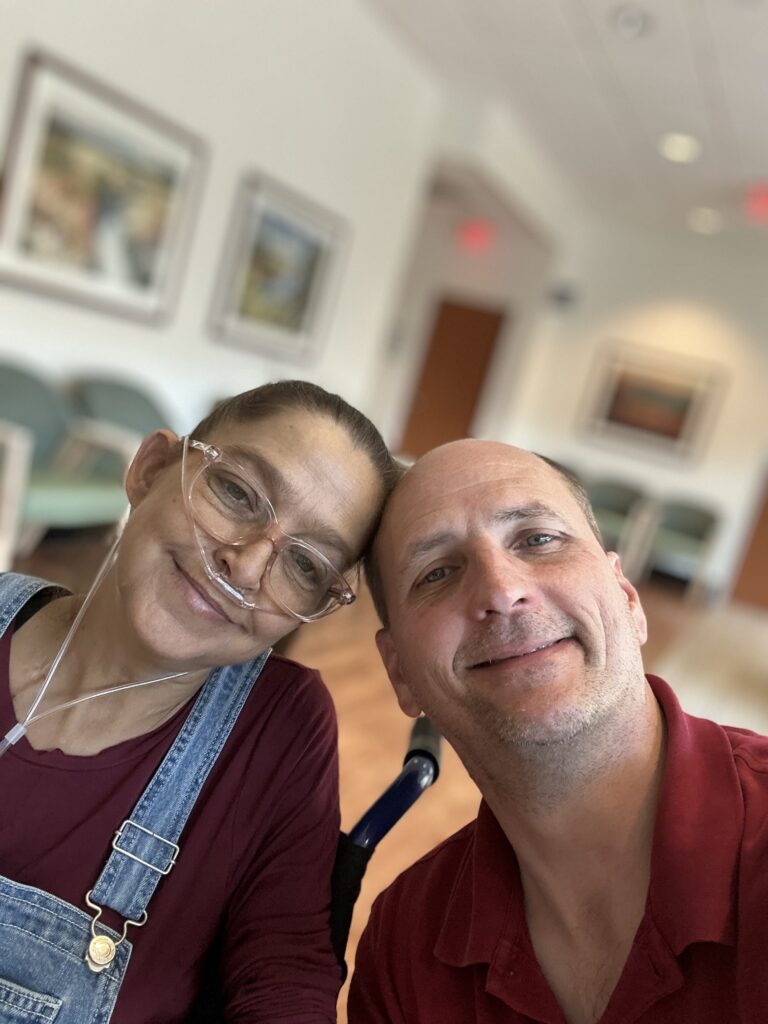
Welcome back, friends. We survived the marathon of appointments last week.
Then came Monday. Melody’s mother took her to her Winship day, and before Melody saw it or anyone told her, I saw it in MyChart: her hemoglobin was above her floor. Again. For the second week in a row. That meant a short day, and a second straight week without a transfusion. That’s a bigger deal than it sounds, and I’ll tell you why in a minute.
Then the mechanic: Little Sally should be done this week. Then Top Host: I moved up to #3, and I’ve been holding there. Good news, times three, before most people finished their coffee. That’s a heck of a way to start a Monday!
Oh, and a colony swarmed. Also on Monday. We’ll get to that.
What’s a “short day”? A Winship day usually runs around six hours: one or two infusions, and if she needs it, a transfusion. The transfusion is the long part. Longtime readers will remember why: a bag of blood is also a bag of fluid, and for a dialysis patient, extra fluid sends her BP through the roof. So she gets it at a slower-than-standard flow rate, easing it in gently, and that takes about twice as long. This Monday: one infusion, no transfusion. Skip the transfusion, and a full-day marathon turns into an errand.
On the way back from that VERY short day, they stopped by the shop to check on the car. I’d left a message, but it went straight to voicemail, and in her excitement, Melody didn’t mind checking in person.
She was home by 11. Sudden free time! And we had no plan for it. Even a good change is still a change, and for an AuDHD brain, every change draws from the same tank, good or bad. Boy, has there been a lot of change lately. Sometimes five changes in one day, for the same thing! But this was a good one to adjust to. She needed a relaxing day, so I obliged.
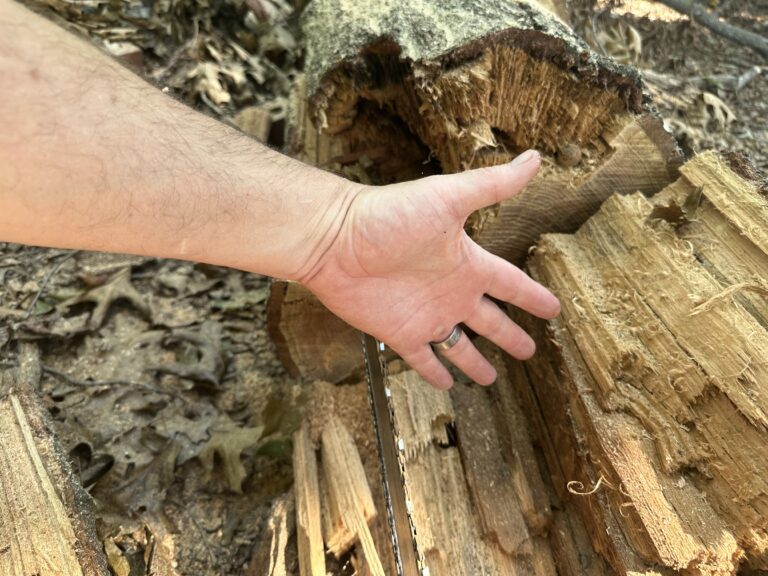
As always, I went to visit my girls. I pray over them and say nice things to them. Later, something told me to take a walk, and I ended up back there again. Good thing. The bees were happy, having a grand time, and then I looked over and saw a group having an even greater time somewhere they weren’t supposed to be.
They were swarming.
This is my first colony, in six years, to swarm. Now, I’ve made up for that good luck with some unusual things, like wild neighborhood dogs bent on toppling every colony I own, and a high-tension line. So I’m not cocky. I’m just noting that swarming hasn’t been a problem I’ve had to deal with. Until now.
Ideally, day one was the time to get them. But I needed the bigger ladder, and I didn’t have the energy to haul it up there. The next day, I ran out of energy halfway. I finally got it the last third of the way, and as I write this, they’re still hanging out, quite active. They’re tonight’s project. I even had a neighbor offer to help. With his broken toes. (I didn’t cause it.)
⬡ ⬡ ⬡
Two weeks. TWO WEEKS!
So, about that bigger deal. With MDS, which has no cure, going without transfusions is THE sign. Without many other reference points, it’s the thing that says “it’s working.” The goal has been stabilizing her hemoglobin loss, because in our modern times, that’s really the only thing they have for this type of cancer.
We’re surprised, and we’re ecstatic. It didn’t click for Melody until later in the day, and when it did, it was just as incredible as when I first saw it.
But it comes with a cost, and that’s the part that’s real, not understood, and hits quality of life. For the last few weeks, Melody has felt pretty poor. She’s hungry, but she can’t take food in or keep it down. The nausea and diarrhea make her feel bad overall, and certainly don’t make for a great meal.
What MDS feels like
MDS means her bone marrow makes blood cells that don’t work right. So her body is always short: short on red cells, which means exhaustion, breathlessness, and weakness; short on white cells, which means infections hit harder; and short on platelets, which means bruising and bleeding. Then layer the treatment on top: nausea, stomach trouble, and days that disappear into recovery. It’s not one bad day. It’s running on empty, every day, and calling it normal.
It may sound impressive to have the mobile numbers of the head doctor at one hospital and the COO of another. Let me dispel that myth. It doesn’t matter. What matters is getting the patient what she needs.
Four green barf bags in a day while you watch her live in misery takes the shine off pretty fast.
⬡ ⬡ ⬡
80%
Last week I mentioned our robust schedule of appointments. Four out of five days, Melody had a doctor’s appointment. That’s 80% of the business week. And that doesn’t include dialysis: another 4 to 6 hours, every other day.
That’s a lot, and that’s the face of terminal and chronic illness. Melody is rich in comorbidities that sometimes fight with each other more than candidates running for office. Her treatments compete with each other at times, and honestly, a new doctor for an unrelated issue is often confused by how her chronic conditions overlap and share symptoms.
Can you imagine? 80% of your weekdays with a doctor, plus dialysis two or three of those five days. That’s the reality for Melody and for thousands of patients in our community and across our state. Can you imagine the weariness of it all? You wake up, and the first thought isn’t coffee. It’s “What doctor do I need to go to today?”
It was an adventure, though. We had the prestigious honor of visiting three Emory campuses, Winship, Decatur, and Midtown, and then we broke the brand streak, ending the week at DaVita. All of these appointments were necessary, and some were new opinions: oncology and treatment, cardiology, a nephrology consult and second opinion, and the “really thorough medical evaluation by a doctor in 10 minutes” at DaVita.
The timing lined up, despite poor scheduling on my part, because my neighbor was on vacation and let me borrow his car for the week. Good thing! Melody’s mother has been taking her to appointments for several weeks, so it was so nice to be allowed to take her for a change.
⬡ ⬡ ⬡
No car, no shortcuts
Meanwhile, I’ve gotten some intimate insights into rideshare. It’s always a different driver and a different car, and when you have no choice, you take what you get. It says it’ll be there at a certain time. Sometimes it is, sometimes it isn’t. Sometimes they find the driveway, sometimes they don’t. And a little whiplash, at no extra fee. As you know, I’m a GREAT passenger, perfectly fine letting someone else do the driving… right?!
I did say that with a straight face.
I didn’t realize the cost, the inconvenience, and the lost opportunities of not having transportation, with poor public transit options. It shouldn’t cost $18 to get one item you need right now, but alas, that’s business, and that’s the reality for a lot of our neighbors. I hope I can help others facing the same thing.
Today is a great example. The birds are out of food, the dogs almost are, and we’re short a few other things. We tried Walmart delivery, and of course it started having problems (the last one was two days late), so I canceled the “service.” But the bird feed is best priced at Walmart, and I need it. So: Uber! Store pickup. What could go wrong?
It took three tries just to get it scheduled. Then the driver asked where I was. I explained I was waiting on her to pick up the order. She said she understood, and went. The app requires the barcode and a screenshot. She asked for my last name and other information, and then: “They can’t find it.”
I canceled the trip, and paid a fee for Uber’s mistake. There may not be many options, but Uber won’t be my first choice for rides, deliveries, or anything else. Why is it so hard to pay for a service and receive it as promised?
Two hours to schedule it. Two more hours chasing support. That’s half a workday for a bag of bird seed.
And in case you’re wondering why I’d order a pickup with no car: I didn’t. I found out Uber offered store pickup first, and then I placed the order.
The good news? I called my neighbor, and he’s picking it up on his way home from work. Easy and simple. I’m so thankful God uses my neighbors to show me what “love your neighbor” actually looks like, and I hope I get better at it by their example.
⬡ ⬡ ⬡
I herd data
Not every appointment was a fight. Her cardiology appointment was THE best: quickest of the week. He was pleased, and kept her current regimen as her treatment. (And her BP has been better.) Part of why it went so well is the data. I keep a BP log and a GI log, with what, when, and how much, and I bring them to every provider so nobody has to guess. No, it’s not C. diff. No, it’s not certain foods. Those are the details the data rules out, so we can skip straight to the real conversation: now, let’s talk about how to fix it.
Last week I told you the chief resident herds the residents. Well, I herd data. And I’ve assembled a select team of doctors to herd it to, so they can find what brings her some relief and comfort, and she can actually be excited about this good news. (Am I being a Debbie Downer? Maybe. But two weeks without a transfusion and four barf bags in a day can both be true.)
⬡ ⬡ ⬡
About that dry weight
Remember last week, when I talked about asking questions, pushing back, and being professional? Remember the primary culprit behind the eight-day hospitalization? About that.
Her clinic has a new nurse who is detailed and engaged. She’s a great asset for a caregiver like me, because she wants the details, including the cardiac log and now the dietary log, to find the best quality of life for Melody. I gave her a detailed summary from the hospital, and we agreed to raise her dry weight. (You know, the 3 kilos that festered into the hospitalization?)
Then came the typical one-sided reading by the doctor. Now, I want to be clear: you don’t need to re-read this, and it’s not a typo. Before the appointment, the nurse raised her dry weight by 2.5 kg. During the appointment, it looked like 3 kg was actually the better number. And what does the doctor do, in passing?
Sets it half a kilo lower than the original, already-too-low dry weight.
Trust, but verify.
So, one more time for the people in the back: listen, ask questions, and don’t assume that what you know needs to change actually gets translated into the change. Make sure that when you leave, you’re clear on exactly what treatment, medication, or changes a provider is making. Despite the image, they’re mere mortal humans, not demigods. Like you and me, they make mistakes, especially inside a system that treats every dialysis patient as one unit with identical needs. You know, cookie-cutter service from a monopoly?
DaVita and Fresenius treat about three-quarters of US dialysis patients. Count the next three providers and it’s 83%.
Sources: DaVita 2025 10-K · Stout · Global Market Insights
They don’t have to talk with you, treat you as a customer, or listen. What are you going to do about it? Leave? They know it, and like our current government, they try to keep us entertained and distracted while we get sicker and sicker. We DID get some new standard forms, with “good job” and “way to go” stickers, just like the ones I’ve used in children’s ministry. I think dialysis patients are a little more experienced and capable than the kids in children’s ministry.
This wasn’t intentional harm, or anything nefarious. It’s a reflection of a system that leaves little time to listen to the patient. And given the lack of surprise or concern after an eight-day hospital stay, they’re used to it.
See, my friends? This is why it’s essential to listen, research, and know the reality you’re walking into. Most of us think of doctors the way we think of funeral homes: you take what you get. But hear me when I say it: be informed, listen, and ask for clarification. Doing exactly that has literally prevented Melody’s death in a facility, at least twice, and it has kept her off bad medicine, which is clearly documented and charted.
Top Host finalist Paul Springfield is holding at #3 in his group of 77. The first cut is October 15. Voting is free, and it’s DAILY: not once, every 24 hours. Yesterday’s vote doesn’t count for today. tophost.org/2026/paul-springfield
The candidate’s position on more-worthy candidates remains unchanged.
⬡ ⬡ ⬡
Next week
So, this week: two weeks without blood, an 80% week, a swarm in a tree, and a bag of bird seed that wouldn’t come home.
Sunday, Melody turns 50. Given everything you’ve read here, you can probably guess why that birthday means more than most. Next week, I’ll tell you why.
New here?
I’m Paul, and Melody is my wife. She lives with chronic kidney disease and dialysis, an autoimmune condition, life after a liver transplant, and, oh yeah, cancer. The exotic one, MDS. Every Wednesday, I write about what that life actually looks like: the appointments, the medicine, the system, the invisible work of caregiving, and the dry humor that gets us through it.
If this one landed, here’s how you help:
- Send it to one caregiver. They’re the ones nobody checks on, and they need to know they’re not crazy.
- Tell me in the comments: what’s the one thing you wish a provider had told you sooner?
- Follow along on Instagram at @thepaulspringfield, so you don’t miss Melody’s 50th.
And if this isn’t your life, I’m glad. Thank you for reading anyway. That’s how this stuff gets seen.