
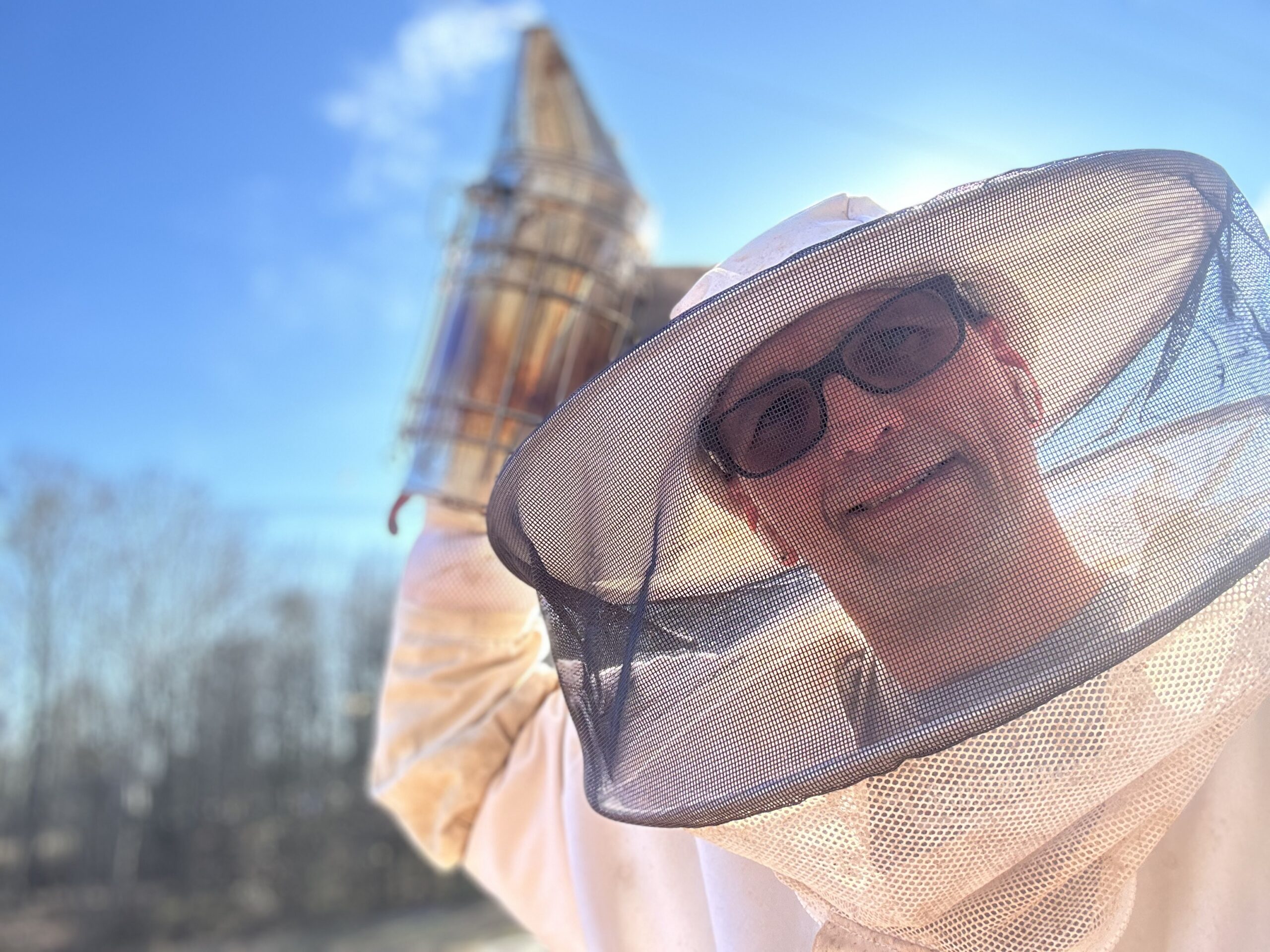
The Split: Why I Just Made Two Hives Out of One

(And Why That’s a Good Thing)
A colony split is exactly what it sounds like — you take one thriving hive and divide it into two. New queen, fresh start, controlled growth. It sounds simple. It is not simple.
The timing has to be right. The colony has to be strong enough to survive the division — enough bees, enough brood, enough stores on both sides to make it through the transition. You’re essentially asking half a colony to rebuild its identity from scratch, and the bees have opinions about that.
Why do it? Swarm prevention, mostly. A hive that runs out of room will swarm — they’ll raise a new queen, the old queen will leave with half the colony, and you’ll watch $200 worth of bees fly into your neighbor’s oak tree. A split puts you in control of that process instead of chasing it.
To understand why this split matters, you need the backstory.
Last year was not a good year for the apiary. January brought two snow events — unusual enough for Lovejoy that the girls made it through both, which felt like a win. They were building up strong heading into spring. Then the stands were knocked over. Not once. Not twice. Three separate times between February and March. And in March, the other half of Paul Springfield Products — Melody — took a serious turn. Five hospitalizations between then and the end of 2025. Medical needs became the priority, as they should. The bees got what attention we could give them alongside building an electric fence to stop the knockovers, and we managed to hold four hives through the season.
Then two colonies simply disappeared. We bought queens for the first time ever — something I’ve historically avoided — and by late fall, those queens and three of the hives were gone. We entered April 2026 with one colony.
One colony.
By the end of April — four hives.
If you’ve kept bees for any length of time, you know that kind of rebound doesn’t happen by accident. It’s the same reminder we get every season we do this: we manage, but we don’t control. There’s grace in that, and there’s a lesson in it too, if you’re paying attention.
So the split. One strong surviving colony, walk-away split, local genetics, no purchased queen. The math of the apiary is moving in the right direction again.
We’ll follow this one through the season. Either it works and we have a new colony going into summer, or it doesn’t and we learn something. Either way, there’s a story here.
Have you had a season that just kept coming at you? Tell me on Facebook or Instagram.